Note
We can make twenty versions. We still have to watch them.
We can generate options faster than we can watch them. When do we make time to think about what is worth keeping?
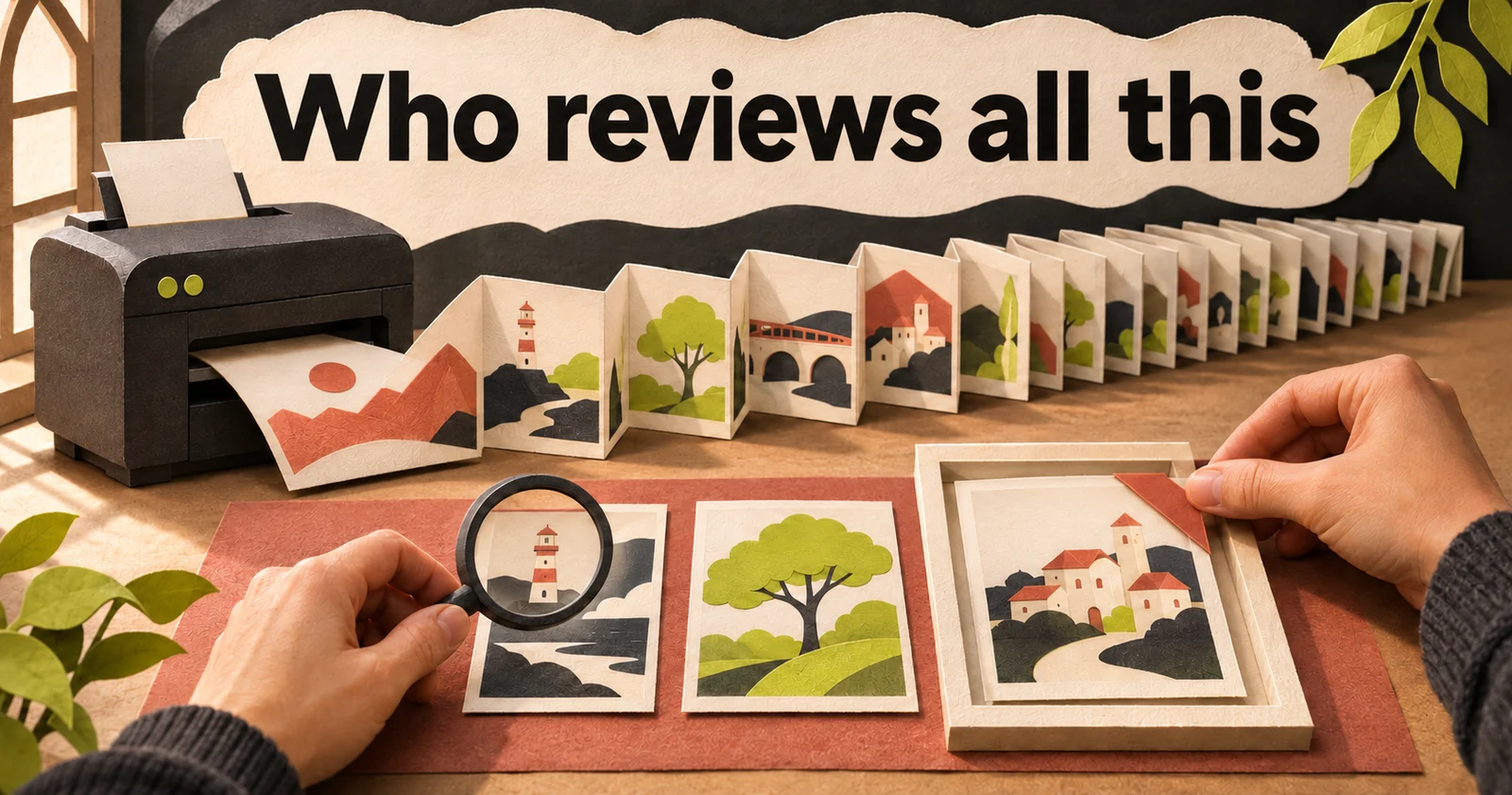
You can ask for twenty openings for a video while you finish a coffee. Then you have to watch them. The third has better pacing, the seventh tells a different story, and the twelfth resembles the third, with music that makes it seem better.
Asking for five more is tempting. Perhaps one will be the version we cannot quite describe yet. Meanwhile, the first twenty are still waiting for a decision.
The number of versions tells us little about how far the idea has moved. Comparing them means remembering what we wanted to test, noticing what changed and paying enough attention to choose.
Where the work moves
With AI, some of the work shifts to checking what appears, integrating it and deciding how to proceed. Researchers at Microsoft Research and Carnegie Mellon (opens in a new tab) found this in accounts from 319 workers. Those who trusted AI more reported less critical thinking. These were participants’ descriptions; their thinking was not measured directly.
In the P&G experiment (opens in a new tab), AI helped people generate better ideas without a corresponding improvement in choosing the best ones. That distinction matters at our table of versions: something good can be right in front of us without our knowing how to recognise it.
In an imagined animatic, changing the framing of ten shots can produce ten new versions without explaining why the character leaves. If that was the problem, one editing test might be enough to move forward.
One question for each test
We could decide what we want to find out before generating another version. Try a slower opening to see whether it creates a sense of waiting. Compare it with the current one. If it works, continue from there; if it does not, keep what we learned before asking for another.
Reviewing needs a share of the time we save too.
That might mean showing the team fewer options, along with the reason for choosing them and the question that remains. The next person can then discuss the decision without having to watch everything from the beginning.
The other versions can stay saved. We can bring one to the team and talk about what works and what still feels unresolved before asking for another.
Sources
The twenty versions and the animatic are hypothetical examples, not productivity measurements. Lee and colleagues collected accounts from 319 workers; the associations between confidence and effort were self-reported. Dell’Acqua and colleagues studied product development at P&G, not audiovisual review. The original publication summaries were consulted; neither full paper is presented as having been read.